How to Stay Consistent With Workouts: 10 Science-Backed Strategies That Actually Work
Workouts – Many people start a fitness journey full of energy and motivation—only to quit a few weeks later. If this sounds familiar, you’re not alone.
The truth is simple: most workout plans fail not because people don’t care, but because they rely too heavily on motivation. And motivation is unpredictable.
What actually creates long-term fitness success is not intensity—it’s consistency.
In this article, you’ll discover 10 practical, research-informed strategies to help you stay consistent with exercise, even when you don’t feel like it.
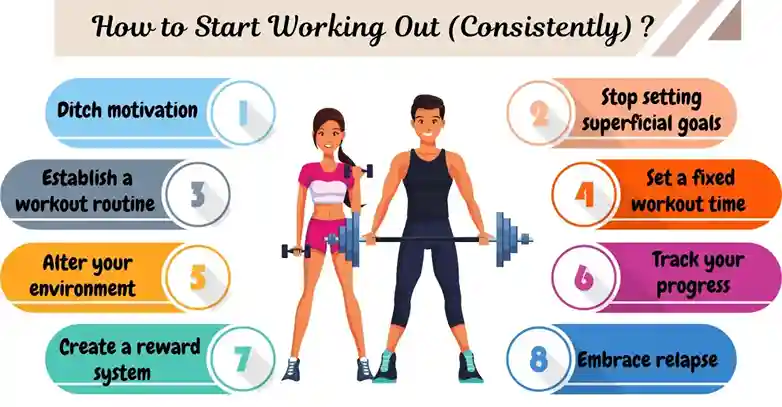
1. Treat Workouts Like Fixed Appointments
If your workout isn’t scheduled, it usually won’t happen.
Instead of fitting exercise into your day when you “have time,” block it in your calendar like an important meeting. This removes decision-making and creates structure.
Consistency starts with planning ahead—not willpower.
2. Stop Relying on Motivation
Motivation changes constantly throughout the day. Waiting to “feel ready” is one of the biggest reasons people fail to stick to fitness routines.
Instead, reduce the effort required to start. Shorten your workouts, simplify routines, and focus on just getting started.
Action creates momentum—not motivation.
3. Your Habits Shape Your Identity
Every workout you complete reinforces a powerful identity: you become someone who exercises.
Every skipped session does the opposite.
Even small actions—like a 5-minute workout—help build a long-term habit identity that supports consistency.
4. Make Exercise Easy and Accessible
The harder it is to start, the less likely you are to do it.
If going to the gym feels like a mission, try home workouts or simple routines with minimal equipment. Remove barriers so starting feels effortless.
Convenience is a powerful predictor of consistency.
5. Eliminate Small Friction Points
Tiny obstacles often lead to skipped workouts:
- Missing workout clothes
- Unorganized equipment
- Not knowing what exercise to do
Prepare everything in advance. Lay out your gear, plan your workout, and reduce excuses before they appear.
6. Choose a Workout Plan That Fits Your Level
One common mistake is choosing routines that are too advanced.
This leads to burnout, frustration, or injury.
Instead, pick a program that matches your current fitness level and gradually increases in difficulty. Progress should feel sustainable—not overwhelming.
7. Don’t Let Your Emotions Control Your Actions
You won’t always feel motivated, confident, or energetic—and that’s completely normal.
Successful people still show up even when they don’t feel like it.
Consistency means acting based on your goals, not your mood.
8. Focus on Identity Instead of Outcomes
Instead of setting goals like “lose 10 pounds,” shift your mindset to:
“I am someone who trains regularly.”
Identity-based goals are more powerful because they reshape how you see yourself, not just what you want to achieve.
When your identity changes, your habits follow naturally.
9. Don’t Expect Exercise Alone to Drive Weight Loss
Exercise is excellent for health, mood, energy, and strength—but it is not the most efficient tool for weight loss on its own.
Focusing only on scale changes can lead to disappointment.
Instead, prioritize performance, well-being, and long-term consistency.
10. Action Creates Confidence

Many people wait to feel confident before starting the gym.
But confidence doesn’t come before action—it comes from it.
Each time you show up and complete a workout, you build self-trust. Over time, that repeated action becomes confidence.
You don’t need to feel ready. You just need to start.
Final Thoughts: Build a System, Not Just Motivation
The key to fitness success isn’t working harder—it’s building a system that makes working out easier to repeat.
When you schedule your workouts, reduce friction, and focus on identity over emotion, consistency becomes natural.
Start small. Stay consistent. Let action lead the way.