
What to Eat Before and After a Workout: The Best Nutrition Guide for Every Workout Type
Whether you’re a beginner starting your fitness journey or a seasoned athlete pushing your limits, what you eat before and after a workout plays a critical role in performance and recovery. The right nutrition fuels your body, improves endurance, and helps muscles rebuild stronger.
However, workout nutrition isn’t the same for everyone. The foods you choose should depend on your workout type, fitness goals, and the timing of your meals. Understanding how to properly fuel your body can significantly improve your results and overall health.
This guide will help you understand the best foods to eat before and after workouts so you can maximize every training session.
Why Nutrition Timing Matters
Exercise changes the way your body uses energy. Because of this, your pre-workout and post-workout nutrition should serve different purposes.
A meal before a long run will look very different from what you eat before lifting weights or doing yoga.
When planning your workout nutrition, focus on these key elements:
Carbohydrates: Your Body’s Energy Source
Carbohydrates provide the fuel your body needs during exercise. They are broken down into glucose, which powers muscle contractions and supports endurance.
Protein: Essential for Muscle Repair
Exercise causes tiny tears in muscle fibers. Protein helps repair and rebuild those muscles, making them stronger over time.
Hydration: Critical for Performance
Water supports almost every function in the body. Proper hydration helps muscles work efficiently and prevents fatigue or cramps.
Timing: Eating at the Right Moment
Eating too much, too little, or too close to a workout can negatively affect performance. The key is to time your meals and snacks appropriately.
What to Eat Before Your Workout
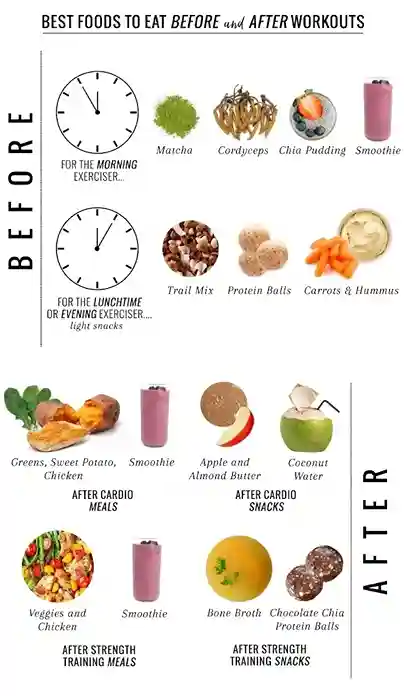
Your pre-workout meal should match your workout type. Different exercises place different demands on the body.
Pre-Workout Nutrition for Cardio (Running, Cycling, HIIT)
Cardio workouts require sustained energy. The goal is to fuel endurance while avoiding stomach discomfort.
Avoid foods high in fat or fiber right before exercise because they can cause nausea, cramps, or digestive issues.
1–3 Hours Before Cardio
Eat a small meal with easy-to-digest carbohydrates and moderate protein.
Good options include:
- Oatmeal with banana
- Whole-grain toast with peanut butter
- Yogurt with fruit
30–60 Minutes Before Cardio
Have a quick snack to boost energy levels.
Examples:
- A banana
- An energy bar
- A small fruit smoothie
These snacks help prevent hunger and maintain performance during your workout.
Pre-Workout Nutrition for Strength Training
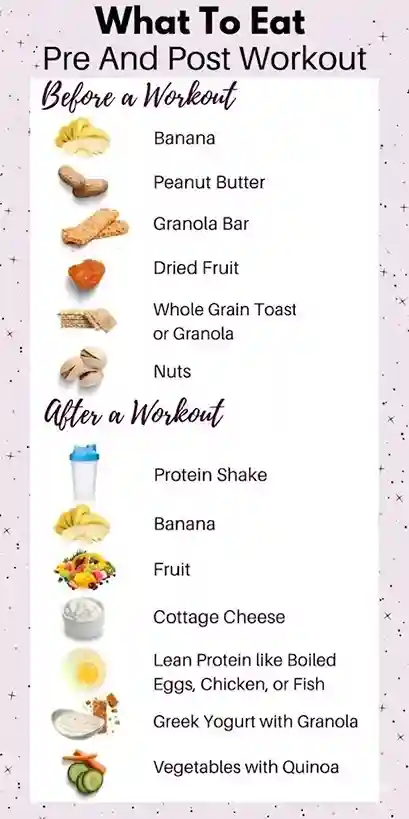
Strength workouts like weightlifting or resistance training place stress on muscles, so your body needs fuel to support energy and muscle performance.
1–3 Hours Before Strength Training
Eat a balanced meal containing carbohydrates and protein.
Examples include:
- Greek yogurt with berries
- Chicken with rice
- Eggs with whole-grain toast
30 Minutes Before Training
A snack is optional, but helpful if you’re feeling hungry.
Try:
- Carrots with hummus
- Cheese with whole-grain crackers
This combination provides both quick energy and muscle-supporting nutrients.
Pre-Workout Nutrition for Yoga, Pilates, or Stretching
Flexibility-focused workouts require comfort and light energy rather than heavy meals.
1–2 Hours Before Exercise
Choose a light snack rich in healthy carbohydrates.
Good options include:
- Fruit smoothie
- Toast with almond butter
- Fresh fruit
Foods to Avoid
Avoid heavy or high-fat foods that may cause bloating or discomfort, such as:
- Fried foods
- Beans
- Corn
- Cruciferous vegetables like broccoli or cabbage
A lighter meal ensures your body stays comfortable and flexible during the session.
What to Eat After Your Workout
After exercising, your body begins repairing muscles and restoring energy levels.
Many people refer to this as the “anabolic window,” a period after exercise when nutrient intake supports recovery. While some experts say this window lasts 30–60 minutes, others believe you have several hours.
The best approach is simple: listen to your body.
If you’re hungry, eat a recovery meal. If not, start with hydration and eat when you feel ready.
Best Post-Workout Foods After Cardio
Cardio workouts deplete energy stores, so focus on replenishing carbohydrates and protein while rehydrating.
Great recovery foods include:
- Chocolate milk
- Fruit smoothie with protein powder
- Hummus with whole-grain pita
These combinations restore glycogen levels and support muscle recovery.
Best Foods for Muscle Recovery
Strength workouts break down muscle fibers, so protein becomes especially important.
Pair protein with complex carbohydrates for optimal recovery.
Examples:
- Grilled chicken with sweet potatoes
- Protein shake with banana
- Tuna sandwich on whole-grain bread
These foods help muscles repair, grow stronger, and prepare for the next workout.
Post-Workout Nutrition for Yoga or Light Exercise
After yoga or stretching, recovery should be gentle and hydration-focused.
You can drink:
- Coconut water
- A low-sugar sports drink
If you need a small snack, try:
- Fresh fruit
- Yogurt
- Nuts or seeds
These options help restore electrolytes and maintain energy balance.
Essential Nutrition Tips for Every Workout
No matter what exercise you choose, these general tips can improve your fitness results:
Avoid Quick-Fix Diet Trends
Extreme fasting or trendy supplements often promise fast results but lack scientific support and may even be harmful.
Pay Attention to Your Body
If certain foods cause cramps or bloating, avoid them before workouts.
Never Train on an Empty Stomach
Intense workouts require fuel. Skipping meals can reduce performance and increase fatigue.
Stay Hydrated
Dehydration can lead to headaches, dizziness, and poor exercise performance. Drink water before, during, and after workouts.
Adjust Protein Intake
Protein needs vary depending on body weight and workout intensity. If you’re unsure how much you need, consult a registered dietitian.
When to Seek Professional Advice
Nutrition can greatly influence your workout results, but everyone’s body is different. Before making major changes to your diet or exercise routine, it’s best to consult a healthcare professional.
A doctor or registered dietitian can help create a personalized nutrition plan tailored to your fitness goals and lifestyle.
Final Tip:
The right foods at the right time can dramatically improve your energy, performance, and recovery. By understanding what to eat before and after a workout, you’ll get the most out of every training session while supporting long-term health and fitness.