Overtraining Syndrome: Causes, Symptoms, Recovery, and Prevention Guide for Athletes
Syndrome – Regular exercise is essential for building strength, endurance, and overall health. However, when training intensity exceeds the body’s ability to recover, it can lead to a serious condition known as Overtraining Syndrome (OTS).
This condition goes beyond normal muscle soreness—it causes a long-term decline in performance, affects physical health, and can also impact mental well-being.
What Is Overtraining Syndrome?
Overtraining Syndrome occurs when an individual trains too intensely or too frequently without allowing sufficient recovery time.
Instead of improving performance, the body begins to break down due to chronic physical stress. This leads to fatigue, reduced strength, hormonal imbalance, and decreased immunity.
In simple terms, overtraining happens when there is an imbalance between exercise stress and recovery.
Main Causes of Overtraining

Several factors can contribute to overtraining:
1. Excessive Training Load
Training too hard for too long without rest disrupts the body’s natural recovery process.
2. Insufficient Recovery
Skipping rest days or not including recovery weeks prevents muscles and the nervous system from repairing properly.
3. Poor Nutrition
Not consuming enough calories, protein, and nutrients reduces the body’s ability to recover from physical stress.
4. Repetitive High-Intensity Workouts
Continuous intense training sessions without variation increase physical and mental fatigue.
Who Is at Risk?
Anyone who exercises regularly can develop overtraining syndrome, but higher-risk groups include:
- Competitive athletes (running, swimming, cycling)
- Young athletes specializing in one sport early
- Fitness enthusiasts following intense daily workout plans
- Individuals training for competitions or performance goals
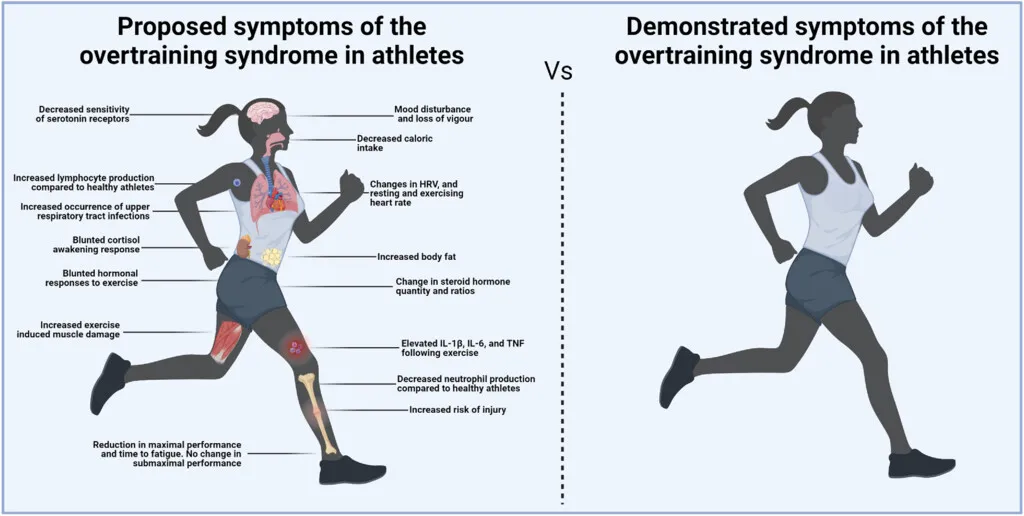
Symptoms of Overtraining Syndrome
Physical Symptoms
- Persistent muscle soreness that worsens over time
- Decreased athletic performance
- Constant fatigue and heaviness in muscles
- Frequent injuries (sprains, stress fractures)
- Increased sweating and overheating
- Weakened immune system (frequent colds or infections)
Health-Related Symptoms
- Elevated resting heart rate or blood pressure
- Digestive problems (constipation or diarrhea)
- Sudden weight loss or appetite changes
- Irregular menstrual cycles
Mental and Emotional Symptoms
- Loss of motivation to train
- Irritability, mood swings, or depression
- Difficulty concentrating
- Sleep disturbances or insomnia
How Overtraining Affects the Body and Mind
Overtraining Syndrome impacts both physical and psychological health.
According to clinical experts from ATI Physical Therapy, overtraining is not just “too much exercise”—it is a long-term imbalance between stress and recovery that disrupts multiple body systems.
Key Effects Include:
- Chronic fatigue and low energy levels
- Hormonal imbalance and increased stress hormones
- Weakened immune system
- Poor sleep quality
- Reduced motivation and self-esteem
- Anxiety and mood disorders
If ignored, overtraining may even affect the nervous system, leading to long-term performance decline.
Recovery From Overtraining
Recovery is the most important step in treating overtraining syndrome.
1. Complete Rest
The primary treatment is reducing or stopping intense training completely for several weeks or even months depending on severity.
2. Light Physical Activity
Low-intensity activities like walking or gentle cycling may be allowed to maintain mobility without stressing the body.
3. Gradual Return to Training
Once symptoms improve, athletes should return slowly:
- Start at ~50% of previous training intensity
- Increase workload by around 10% per week
4. Professional Guidance
Doctors, coaches, or sports specialists can help create a safe return-to-training plan.
How to Prevent Overtraining
Prevention is more effective than recovery. Experts, including those at ATI Physical Therapy, recommend:
- Scheduling regular rest days and recovery weeks
- Sleeping 7–10 hours per night
- Eating enough calories, protein, and carbohydrates
- Balancing high and low-intensity workouts
- Monitoring heart rate and recovery using wearable devices
Consistent recovery habits help maintain long-term performance and reduce injury risk.
When to See a Doctor
You should consult a healthcare professional if you experience:
- Long-term fatigue that does not improve with rest
- Persistent drop in performance
- Sleep disorders or mood changes
- Frequent illness or injuries
Many symptoms of overtraining may also overlap with other medical conditions, so professional diagnosis is important.
Doctors such as Zilpah Sheikh emphasize the importance of proper evaluation to rule out other health issues.
Expert Insight
Medical contributors like Nichole Bazemore highlight that overtraining develops gradually and is often mistaken for normal workout fatigue, making early recognition essential.
Key Takeaways
- Overtraining Syndrome is caused by excessive training without enough recovery
- It affects both physical performance and mental health
- Recovery may take weeks to months depending on severity
- Prevention requires balanced training, proper nutrition, and adequate sleep